5.0

(912) 225-4938 Serving Georgia & South Carolina
Request Call Back

A driver glances at a phone for only a moment, and a routine trip through Savannah becomes a serious collision. To prove distracted driving Georgia injury claimants need more than a suspicion. They need evidence showing what took the driver's attention away, when it happened, how it caused the crash, and what harm followed. That proof may come from phone records, eyewitnesses, video, photographs, vehicle data, and the driver's own statements.
Request a free case evaluation from The Cornwell Firm to discuss the evidence that may be available after a distracted-driving crash.
This article explains the evidence-gathering process in plain language. Every collision is different, and the available proof depends on the facts. Acting promptly can make an important difference because recordings may be overwritten and digital evidence can become harder to obtain.
Distracted driving is usually proven by assembling several facts into one clear timeline. A single item, such as a witness saying the driver looked down, can be useful. A stronger case often connects that observation with phone activity, video, a lack of braking, or other evidence from the same moments.
The central questions are straightforward: What was the driver doing? Did that conduct fall short of reasonable care? Did it cause the collision? What injuries and losses resulted? Evidence should address each question rather than merely show that a phone was somewhere inside the vehicle.
Direct evidence shows the distraction itself. Examples include a witness seeing the driver type a message or a dashboard camera recording the driver looking down. Circumstantial evidence supports a reasonable conclusion. For example, a vehicle that drifts without braking while phone activity occurs at the same time may suggest inattention, even without a clear view inside the vehicle.
Neither type automatically decides a claim. Lawyers compare the evidence, test whether the timelines match, and prepare for alternative explanations from the driver or insurer. Consistency across several independent sources makes the account more persuasive.
Georgia restricts drivers from holding or supporting a phone while operating a vehicle. The state's traffic-law guidance explains the hands-free requirements. Evidence of a violation can support an injury claim, but it does not replace the need to show that the conduct caused the collision and resulting harm.
A police citation can be helpful, yet it is not the only way to establish distraction. Officers may not witness the conduct, and drivers do not always admit what happened. An investigation can uncover evidence that was unavailable at the roadside.
The first hours and days often provide the best opportunity to protect evidence. Safety and medical care come first. When possible, the injured person or someone helping them can document the scene and identify sources of information for a later investigation.
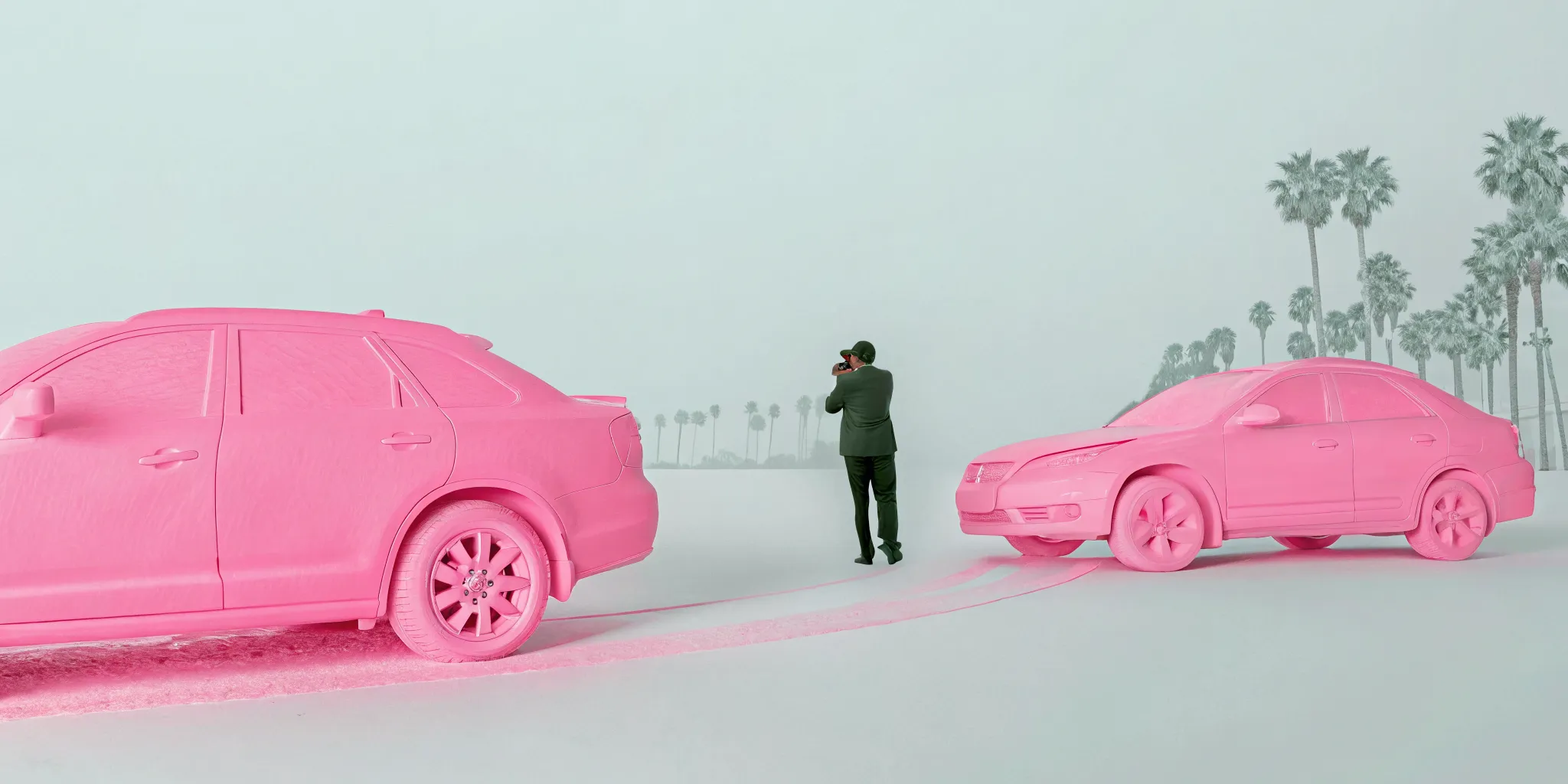
Some evidence does not remain available for long. A business may routinely overwrite security footage. Vehicle information can be lost if a damaged car is repaired or destroyed. Relevant phone or app records may also be subject to retention limits.
A preservation request tells a person or organization not to destroy identified evidence while a claim is investigated. It must be directed to the right recipient and describe the material with care. Sending one quickly does not guarantee that every record exists, but waiting can reduce the available options.
People injured in a crash can review the firm's guide on how to file a personal injury claim and its overview of car-accident representation for additional context.
Phone evidence can help establish whether a driver was communicating or interacting with an app near the time of impact. Carrier records may show the timing of calls or some messages. Device or app data may provide different details. The scope varies, and a carrier log typically does not reveal every action performed on a phone.
The most useful analysis compares the phone activity with a reliable crash time. That time may come from an emergency call, video timestamp, vehicle data, dispatch record, or another source. A vague estimate can weaken the connection, while a well-supported timeline can make the evidence more meaningful.

An injured person should not attempt to access someone else's private device or account. Relevant records may be obtained through consent, formal requests, subpoenas, or court-supervised discovery, depending on the stage of the matter. Requests should be focused on information connected to the collision rather than an unlimited review of private data.
A lawyer can also address authenticity. A screenshot can be incomplete or taken out of context. Records from a reliable source, supported by testimony and a clear chain of custody, are generally more useful than an unexplained image.
A record showing activity does not always prove who used the device or whether the activity caused the crash. A passenger may have used the phone, a message may have arrived without being viewed, or a hands-free call may not explain the collision. Those possibilities are why phone evidence should be compared with physical evidence, testimony, and vehicle behavior.
Independent evidence can be especially valuable when the drivers disagree. A witness may have seen the at-fault driver looking toward the center console. A storefront camera may capture lane drift or the moment of impact. A dash camera may show traffic conditions and whether the driver reacted before the collision.
Witnesses should be contacted promptly and asked open-ended questions. Their own words are more useful than an account shaped by suggestions. Details such as where the witness stood, what they could see, and how long they observed the vehicle help evaluate reliability.
Passengers may also have relevant information, although an insurer may question whether they favor one driver. A neutral witness with a clear view can help corroborate other evidence.
Potential sources include businesses, residences, parking facilities, transit vehicles, and nearby drivers. Not every camera records continuously or retains footage for the same period. Identifying the camera and requesting preservation quickly is essential.
Video may not show a phone clearly, yet it can still reveal weaving, delayed braking, or failure to respond to a traffic signal. Those observations can support a distraction theory when matched with other proof.
Some vehicles record information about speed, braking, steering, seat belts, and other events near a collision. The available data depends on the vehicle and circumstances. A qualified professional can assess whether retrieval and reconstruction are appropriate.
Physical evidence also matters. Damage patterns, roadway marks, final resting positions, and scene measurements can help explain how the crash occurred. A reconstruction should be grounded in reliable evidence, not assumptions about what a distracted driver would have done.
Call The Cornwell Firm at (912) 225-4938 for a free case evaluation if evidence may need to be preserved after a Savannah collision.
An insurer may argue that there is no proof of distraction, that phone activity occurred before or after impact, or that another event caused the crash. It may also dispute the severity of injuries or contend that the injured person shares responsibility. Preparing for these arguments is part of building a clear claim.
| Common insurer argument | Evidence that may help answer it |
|---|---|
| There is no proof the driver used a phone. | Focused phone records, witness testimony, video, admissions, and app or device evidence. |
| The activity did not occur at impact. | A timeline tied to video, emergency calls, dispatch records, or vehicle information. |
| Something else caused the collision. | Scene photographs, reconstruction, traffic-signal evidence, and consistent witness accounts. |
| The injuries are unrelated or minor. | Prompt medical evaluation, treatment records, provider opinions, bills, and documentation of limitations. |
Even strong proof of distraction is only one part of an injury claim. The evidence must connect that conduct to the crash. The injured person must also document injuries, treatment, lost income, property damage, and other claimed losses.
Georgia's fault rules can affect recovery when more than one person is alleged to have contributed to a collision. Because small details may influence that analysis, avoid speculating in a recorded statement or signing a broad authorization without understanding its scope. The firm's frequently asked questions provide general information about working with a personal injury lawyer.
A lawyer begins by listening to the client's account and identifying what evidence may exist. The next steps can include obtaining the crash report, contacting witnesses, sending preservation requests. Inspecting vehicles, requesting relevant records, and consulting qualified professionals when the facts call for it.
A useful chronology lines up the driver's conduct, vehicle movement, impact, emergency response, and medical treatment. It identifies the source for every important time and notes where estimates or uncertainties remain. This approach can reveal both strengths and gaps before an insurer raises them.
Not every claim needs every investigative tool. A clear video and credible admission may resolve the distraction question quickly. A disputed multi-vehicle crash may require more extensive work. The goal is to obtain reliable, relevant evidence without losing focus on the injuries and the client's needs.
The Cornwell Firm is a locally and family-owned Savannah firm. Its attorneys bring former insurance-defense experience to plaintiff-side personal injury cases. The firm offers free case evaluations, has no upfront attorney fees, and charges no attorney fee unless the client wins. Results cannot be guaranteed, and each matter depends on its own facts.
Phone records can help establish a timeline of calls or messages near the crash, but they usually work best alongside testimony, video, vehicle data, and other evidence. A lawyer may need formal legal process to obtain relevant records.
A denial does not end the inquiry. Witness accounts, surveillance footage, photographs, vehicle data, app activity, and inconsistencies in the driver's account may provide independent evidence.
Evidence should be preserved as soon as possible. Video can be overwritten, witnesses can become difficult to locate, and digital or vehicle records may not remain available indefinitely.
No. A citation may support a claim, but an injured person still generally must connect the driver's conduct to the collision and document the resulting injuries and losses.
Distracted-driving cases are built with timely, credible evidence. If you were injured in a Savannah crash, The Cornwell Firm can review what happened, discuss possible sources of proof, and explain potential next steps. The firm is available 24/7 and can meet clients where needed.
Contact The Cornwell Firm or call (912) 225-4938 to request a free case evaluation.