5.0

(912) 225-4938 Serving Georgia & South Carolina
Request Call Back
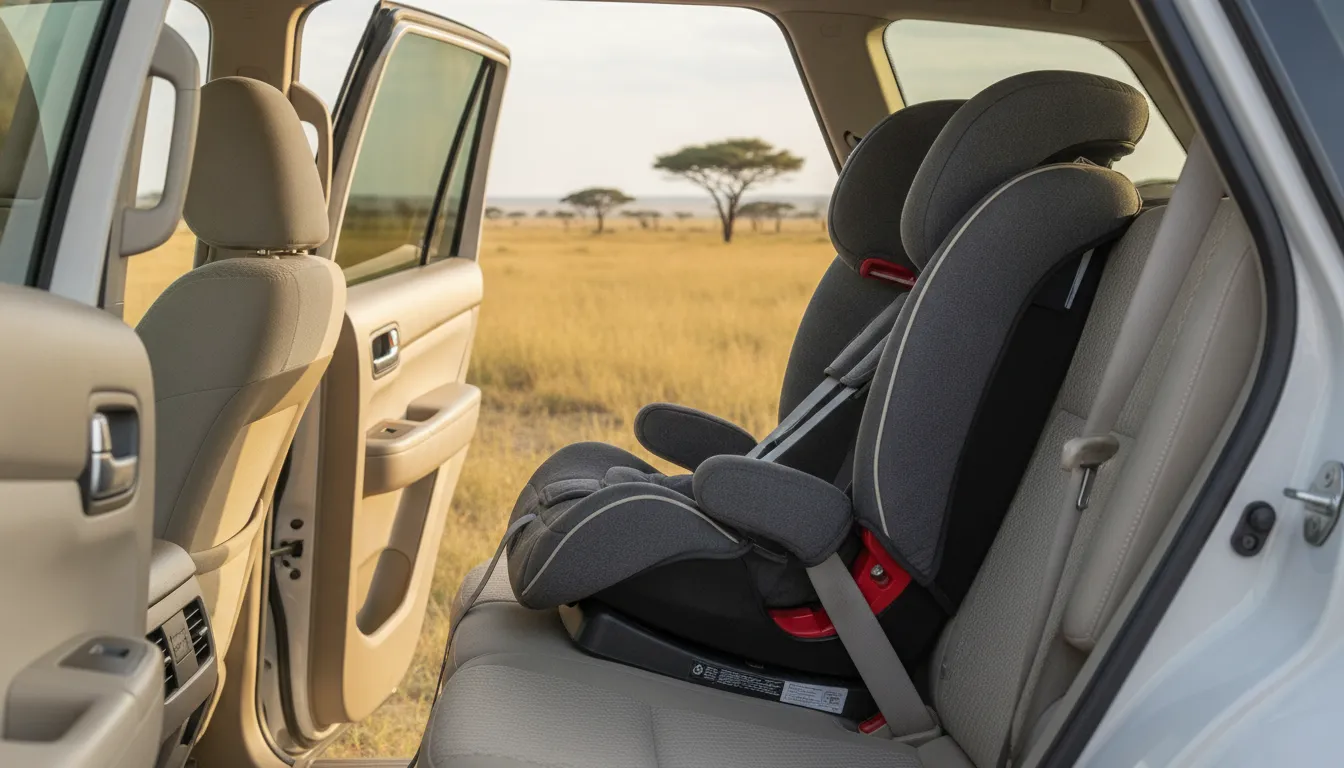
For Savannah parents, understanding Georgia child passenger safety laws, including the front-seat age rules, can make an important difference before a trip or after a collision. Georgia law focuses on a child's age, height, weight, seating position, and the type of restraint used. The safest decision may depend on facts that are not obvious from age alone.
If your child was hurt in a crash, The Cornwell Firm can help you understand your options. Request a free case evaluation and share what happened, what injuries were reported, and what evidence is available.
Georgia generally requires a driver transporting a child under age 8 in a passenger automobile, van, or pickup truck on a public road to provide a child passenger restraining system appropriate for the child's height and weight. The restraint must be used properly, and a child under 8 generally must ride in a rear seat unless a specific exception applies.
The central rule is not simply "children under 8 use a car seat." The law also addresses the child's height and weight, available seating, the belts installed in the vehicle, and whether other children are already using the appropriate rear seating positions. The governing statute is Georgia Code Section 40-8-76. Because a legal rule can change and individual facts matter, use this article as general information rather than individualized legal advice.
Under Georgia's child passenger safety law, a child under age 8 may ride in the front seat only when the vehicle has no rear seating position appropriate for correctly restraining a child, or when all appropriate rear seating positions are occupied by other children. The child must still be properly restrained in an appropriate car seat or booster seat.
For a quick answer, Georgia does not create a simple rule that makes the front seat automatically acceptable on a child's eighth birthday. The law's specific under-8 front-seat rule is one part of the analysis, while safety recommendations continue to favor the rear seat for younger children. The Georgia Governor's Office of Highway Safety summarizes the front-seat exceptions in its Child Passenger Safety FAQ.
Some vehicles, including certain pickup trucks, may not have a rear seating position that is suitable for a child restraint. In that situation, Georgia law allows an under-8 child to ride in the front only if the child is properly restrained and the restraint is appropriate for the child's height and weight. The vehicle and restraint instructions still matter.
Parents should check the vehicle owner's manual and the child restraint manufacturer's instructions before placing a seat in front. Airbags are designed for adults. If a manufacturer prohibits a particular restraint from being used in front of an active airbag, that instruction must be taken seriously. If a front-seat arrangement is unavoidable, ask the manufacturer or a qualified child passenger safety technician for guidance on the safest permitted setup.
Georgia also recognizes a situation in which all appropriate rear seating positions are occupied by other children. This exception does not mean a child may ride unrestrained or that any seating position is acceptable. Each child should be secured in the restraint appropriate for that child's size, and the available seating should be arranged for the best protection that the vehicle and restraints allow.
The official Georgia FAQ explains that the front-seat exception is limited to a vehicle with no appropriate rear seating position or a vehicle in which all appropriate rear seating positions are occupied by other children. It does not list convenience, a child's preference, or a short drive as a separate exception.
A child under 8 must generally use a child passenger restraining system that is appropriate for the child's height and weight. The right restraint is not determined by age alone. A child may need a rear-facing seat, forward-facing seat with a harness, or booster seat depending on the seat's limits, the child's size, and the manufacturer's instructions.
Georgia's Governor's Office of Highway Safety child passenger safety guidance recommends choosing a restraint based on height and weight and installing it according to the manufacturer's directions. Parents should read both the car seat manual and the vehicle manual, make sure the seat is secured correctly, and confirm that the harness or belt fits as instructed.
The Georgia Governor's Office of Highway Safety identifies an exception for a child under 8 whose height is over 4 feet 9 inches, or 57 inches. The official FAQ also identifies a written statement from a physician for a child whose physical or medical condition prevents the child from being restrained as the law otherwise requires. A parent who believes an exception applies should keep the supporting documentation and confirm the current rule before relying on it.
A height exception does not mean a child should travel without a safety belt. The child must still be properly restrained by a safety belt, and a belt should fit across the strong parts of the body rather than the stomach or neck. If the fit is uncertain, get individualized safety guidance instead of relying only on the child's age.
Georgia law includes a narrow exception for a child under 8 who weighs at least 40 pounds. A lap belt may be used when the vehicle is not equipped with both lap and shoulder belts, or when all available lap-and-shoulder belt positions other than the driver's position are being used to properly restrain other children. This is not a general substitute for using an appropriate car seat or booster whenever one can be used.
If multiple children are traveling together, parents should first evaluate whether the restraints can be repositioned to provide the best protection for everyone. The Georgia Governor's Office of Highway Safety recommends getting help when a seating arrangement is difficult to evaluate. A child safety technician can help identify whether the seat, belt, and vehicle position work together as intended.
For children under 8 who are shorter than 57 inches, Georgia's law generally requires a rear seating position, subject to the front-seat exceptions described above. The Georgia Attorney General's Consumer Protection Division also advises that children under 13 should ride in the back seat as a safety recommendation. The under-13 guidance is broader than the law's specific under-8 rule.
That distinction matters. A parent may be complying with the minimum legal rule while still choosing a safer arrangement based on the child's size, the vehicle, the restraint, and the presence of an airbag. Legal compliance and best safety practice often overlap, but they are not always identical questions.
| Child or vehicle situation | General Georgia rule or guidance |
|---|---|
| Child under 8 | Use an appropriate child passenger restraint based on height and weight. |
| Child under 8 and under 57 inches | Use a rear seating position unless a listed front-seat exception applies. |
| Child under 8 and over 57 inches | The official FAQ identifies an exception from the child-restraint/rear-seat rule, but a safety belt is still required. |
| Vehicle has no suitable rear seating | A properly restrained child may use the front seat under the statutory exception, subject to restraint and vehicle instructions. |
| All suitable rear positions are occupied by children | An under-8 child may use the front seat only when properly restrained under the statutory exception. |
| General safety recommendation | The Georgia Attorney General's guidance recommends the back seat for children under 13. |
Georgia's child-restraint statute does not apply in exactly the same way to every vehicle. The statute and state guidance identify exceptions for taxicabs and public transit vehicles. Standard school buses and multifunctional school activity buses are also treated differently under the state guidance. The details can depend on the vehicle's legal classification.
Do not assume that a vehicle's size, a private ride arrangement, or a short trip creates an exception. If you are unsure whether a vehicle qualifies, check the current state guidance and the vehicle's classification. The Georgia Attorney General's child car seat guidance provides additional information about legal requirements and safety considerations.
When a child is injured in a collision, the immediate priority is medical care and safety. Once the child is receiving appropriate attention, parents can take practical steps to preserve information about the crash and the injury. A prompt, organized record can help doctors, insurers, and attorneys understand what happened without relying on a stressed memory.
A child may be unable to describe pain or symptoms clearly, and some injuries may not be obvious at the scene. Parents should report concerns to a healthcare professional and follow the professional's advice. A lawyer cannot replace medical care, but a legal consultation can help a family understand potential claims, evidence, and communications with insurers.
If another driver or party may have caused your child's injuries, The Cornwell Firm can review the facts. Contact the firm for a free case evaluation before important evidence is lost or an insurance question becomes harder to manage.
Usually not. A child under 8 must generally ride in the rear seat in an appropriate restraint. Georgia law allows front-seat placement only when the vehicle has no appropriate rear seating position or all appropriate rear positions are occupied by other children. The child must still be properly restrained.
Georgia's specific child-restraint front-seat restriction applies to children under 8, but age alone does not establish that the front seat is the safest choice. The vehicle manual, restraint instructions, child size, and airbag status matter. State safety guidance recommends the back seat for children under 13.
Yes. The official Georgia child passenger safety FAQ identifies a height exception from the child-restraint/rear-seat rule for a child under 8 over 57 inches, but the child must still be restrained by a safety belt. The belt should fit correctly, and a parent should follow current state guidance.
Only in the limited circumstances described by Georgia law, including when the child weighs at least 40 pounds and the vehicle lacks lap-and-shoulder belts or those positions are occupied by other children. A lap belt is not a general replacement for an appropriate car seat or booster.
Seek medical care first and preserve information about the crash, the vehicle, the restraint, and the child's symptoms. Proper restraint use does not by itself answer who caused a collision or whether a claim exists. A Savannah personal injury attorney can review the available facts without promising a result.
Parents can review the official Georgia safety resources linked above and seek medical guidance for an injured child. If the crash caused an injury, involved disputed responsibility, or led to insurance pressure, request a free case evaluation through The Cornwell Firm so the circumstances can be discussed with a legal professional.
Georgia child passenger safety laws provide important minimum requirements, but a crash investigation may involve far more than a front-seat age rule. The vehicle positions, restraint setup, road conditions, other driver's conduct, medical records, and the child's symptoms may all matter. The Cornwell Firm represents injured people and families in Savannah, Georgia with compassionate client care and strong litigation advocacy.
When your family needs answers after a child-injury crash, The Cornwell Firm is ready to listen. Request a free case evaluation or call (912) 225-4938. There are no upfront costs for a case evaluation, and representation is contingency-based, with no attorney fees unless the client wins.