5.0

(912) 225-4938 Serving Georgia & South Carolina
Request Call Back
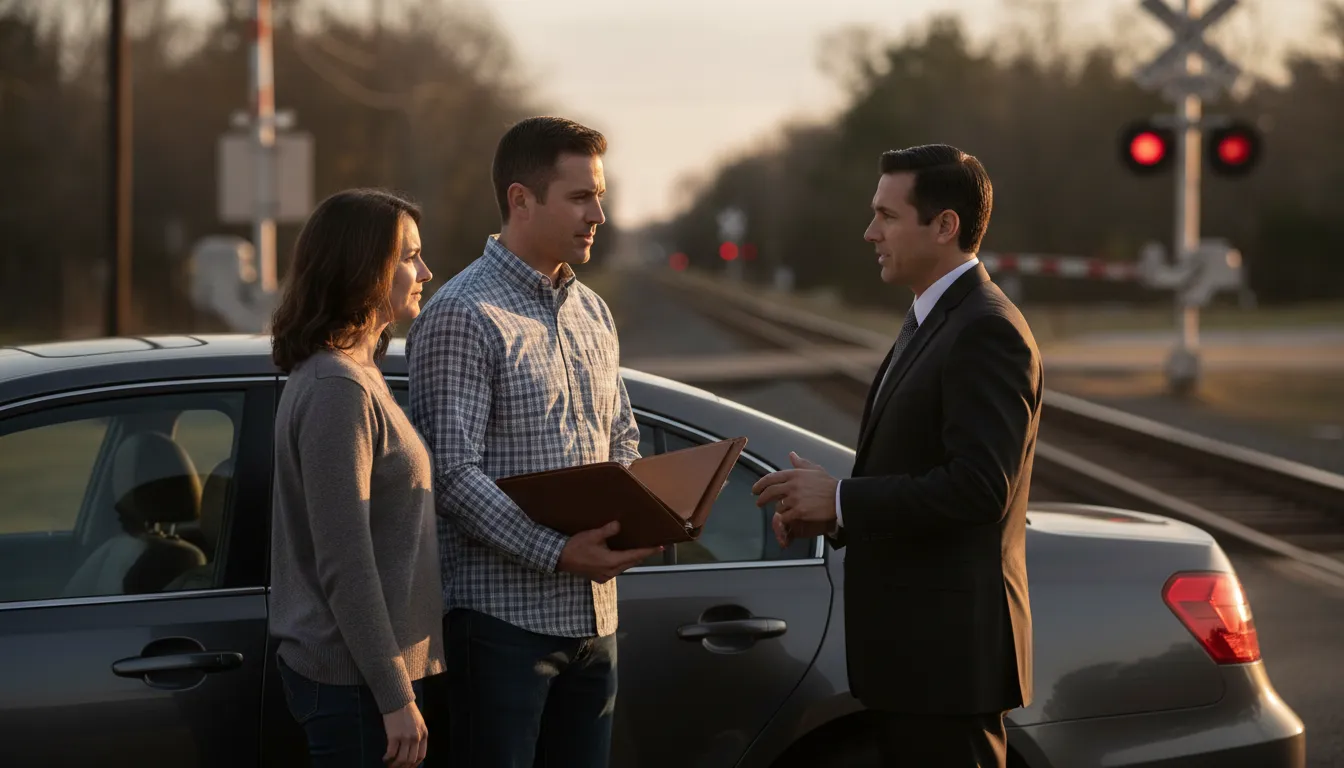
A tractor-trailer crash can leave you facing serious injuries, mounting medical expenses, and an uncertain road ahead. The size and weight of a big rig can produce force and damage far beyond a typical two-car collision. Often leading to catastrophic injuries, lengthy treatment, and long-term changes to work and family life. At the same time, a trucking company and its insurer may begin protecting their interests within hours. Dispatching investigators and seeking early statements before the full picture is known.
A georgia truck accident attorney can investigate the crash, identify every potentially responsible party, and address the federal and Georgia rules that may affect your claim. A truck collision can involve the truck driver, the motor carrier, cargo loaders, a maintenance provider, or a vehicle manufacturer, rather than only the person behind the wheel. Liability often turns on records such as driver hours-of-service logs, maintenance histories, and company policies, so evidence preservation matters from the first days after the crash.
For injured people and families in Savannah, getting focused legal guidance early can help preserve evidence. Protect your rights, and keep an insurer from defining the facts before your side is heard. Understanding why a commercial truck collision is so different from an ordinary car crash explains why an experienced investigation matters. And how it can shape who is responsible and what you may recover.
Request a free case evaluation today and talk with a Georgia truck accident attorney who can investigate your crash and protect your rights before the evidence disappears.
A collision with a tractor-trailer can create challenges that do not arise in a typical two-car accident. The size and weight of a commercial truck can affect the force of the impact, the damage to a passenger vehicle, and the seriousness of resulting injuries. Even when the visible crash scene seems straightforward, the facts behind it may involve a driver, a carrier, a maintenance provider, a cargo loader, or another business.
The Federal Motor Carrier Safety Administration's Large Truck and Bus Crash Facts report is a recurring annual source of descriptive statistics about fatal, injury, and property-damage-only crashes involving large trucks and buses. That ongoing tracking reflects the distinct safety issues involved in commercial trucking, including driver conduct and vehicle safety. It also shows why a truck claim should be approached as more than an ordinary insurance exchange.
| Factor | Ordinary Car Accident | Commercial Truck Accident |
|---|---|---|
| Scale of impact | Lower mass, more similar vehicles | Far greater size and weight, more severe damage and injuries |
| Possible parties | Usually just the two drivers | Driver, trucking company, cargo loader, maintenance provider, or manufacturer |
| Key evidence | Police report, scene photos, witness accounts | Hours-of-service logs, maintenance records, DOT markings, company policies |
| Regulations at issue | Standard traffic laws | Federal and Georgia commercial vehicle safety rules |
| Opposing side | An individual's insurer | Experienced trucking company defense teams and insurers |
A thorough investigation can require records that are not available in a standard car accident claim. Those records may include maintenance and inspection logs, repair histories, driver qualification materials, dispatch information, and hours-of-service records. Hours-of-service records can help investigators examine whether a driver was operating within applicable limits and whether fatigue may have played a role. Maintenance records may help show whether a safety problem was identified, ignored, or created by inadequate repairs.
These materials can be time-sensitive. A Georgia truck accident attorney may need to identify and preserve relevant evidence before it is lost, changed, or overlooked. The investigation should also compare the records with the physical evidence, crash report, photographs, witness accounts, and available electronic data. That process can help distinguish what happened from what a trucking company or insurer later claims happened.
Truck accident claims can involve multiple potentially responsible parties rather than only the two drivers. The driver and trucking company may be examined, along with companies responsible for loading cargo, maintaining the truck, or manufacturing a defective component. A trucking company may also face questions about negligent hiring, training, or supervision.
Large carriers and their insurers often have experienced defense teams working immediately after a serious collision. Injured people and families deserve an investigation that takes the same care. A claim should account for the full circumstances of the crash, the injuries involved, and the conduct of every party whose decisions may have contributed to the harm.
A tractor-trailer collision may look like a dispute between two drivers, but the facts often point to several potentially responsible parties. Identifying each one matters because different people and companies may control the driver, the truck, the cargo, or the equipment that contributed to the crash. The Federal Motor Carrier Safety Administration recognizes that large-truck crash investigations can involve the driver, the trucking company, cargo loaders, and vehicle manufacturers. FMCSA crash data provides the framework for understanding why these cases require more than a quick review of the police report.
A driver may be liable when careless conduct causes the collision. Examples can include speeding, following too closely, distracted driving, fatigue, impaired driving, or failing to respond safely to changing traffic. Investigators may examine the driver's conduct before and during the crash, along with available records that help show whether the driver complied with applicable safety requirements.
The motor carrier may share responsibility for the driver's actions when the driver was working within the scope of the job. The company's own conduct may also create a separate basis for liability. For example, a trucking company can face liability for negligent hiring, training, or supervision when it puts an unsafe or unqualified driver behind the wheel. The FMCSA identifies carrier safety responsibilities as part of the broader commercial-vehicle safety system.
That investigation may involve the driver's qualifications, employment history, training, disciplinary records, and the company's response to prior safety concerns. A company may also control maintenance schedules, inspection practices, dispatch decisions, and policies that affect how safely a truck is operated. Preserving these records quickly can be important because corporate defendants and their insurers may begin their own investigation immediately after a crash.
A cargo-loading company or other party responsible for securing freight may be liable if an improperly balanced, overloaded, or unsecured load shifts, falls, or affects the truck's handling. The responsible party may not be obvious from the scene, particularly when several businesses handled the shipment.
A vehicle or part manufacturer may also be involved when a defective tire, brake, steering component, or other safety-critical part contributed to the wreck. These claims require careful examination of the truck, maintenance history, inspection records, and damaged components before evidence is lost or altered.
If you were injured in Savannah, a Georgia truck accident attorney can help identify every potentially liable party and pursue the evidence needed to evaluate the claim. A complete investigation may protect your ability to seek accountability from all responsible sources, rather than accepting an incomplete explanation from one insurer.
Commercial trucks operate under rules designed to identify responsible motor carriers, promote safe driving, and make safety violations easier to investigate. After a tractor-trailer crash in Savannah, those rules can provide important evidence about what happened and who may be legally responsible.
The Federal Motor Carrier Safety Administration (FMCSA) publishes its Large Truck and Bus Crash Facts report each year. The report compiles statistics about fatal, injury, and property-damage-only crashes involving large trucks and buses. It is not proof that a particular driver caused your collision, but it shows why an investigation must examine more than the vehicles and the scene. A Georgia truck accident attorney may need to examine driver conduct, carrier safety practices, and vehicle condition together.
Georgia Department of Public Safety Rule No. 1-390.21 requires commercial motor vehicles weighing more than 43,000 pounds to display the owner's name and DOT number. That information can help identify the motor carrier, particularly when a crash report, witness account, or photograph does not clearly establish which company operated the truck.
Identification is more than a paperwork detail. Once the carrier is identified, an investigation can focus on relevant company records, including driver qualifications. Training, inspection history, and other materials that may show whether the company followed its safety obligations. The applicable rule appears in the Georgia DPS commercial motor vehicle traffic codes and safety rules.
Georgia also restricts commercial drivers' use of wireless telecommunications devices while operating their vehicles. O.C.G.A. 40-6-241(d) addresses the unlawful use of wireless devices by commercial motor vehicle drivers. If phone records, vehicle data, witness statements. Or other evidence indicate that a driver was using a prohibited device before the crash, that violation may support a negligence claim. The rule itself does not automatically establish every element of a lawsuit. But it can strengthen the evidence that the driver's conduct fell below the required standard of care.
In a Savannah truck accident case, a regulation violation must be tied to the collision and resulting injuries. Evidence may include photographs of the truck's markings, the police report, inspection and maintenance records, electronic data, phone records, and testimony from witnesses or experts. A carrier or driver may argue that the violation did not cause the crash. So the investigation must connect the rule breach to the unsafe act and the harm that followed. Preserving evidence quickly matters because trucking records and electronic data may not remain available indefinitely.
After a tractor-trailer collision in Savannah, the facts of the crash matter, but so does the legal framework used to assign responsibility. Georgia law can affect whether you recover damages, how much responsibility is assigned to each person or company. And which insurance policies may be available to address your losses.
Georgia follows a modified comparative negligence approach. An injured person may recover damages when they are less than 50% responsible for the accident. However, the amount recovered can be reduced to reflect the person's share of fault. A driver who is found partly responsible could therefore see their recovery reduced, even when a truck driver, trucking company, or another party also contributed to the collision. If the injured person is found to be 50% or more at fault, Georgia's rule generally prevents recovery.
Insurance companies may try to use this rule aggressively. They may argue that a driver was speeding, following too closely, distracted, or failed to react quickly enough. In a truck case, those arguments should be tested against the available evidence. Including the crash scene, vehicle damage, witness accounts, traffic-camera footage, and relevant driver or company records. Fault should be based on the evidence, not an early insurance assessment.
The Georgia Motor Vehicle Accident Reparations Act establishes insurance requirements for motor vehicles and requires owners to maintain minimum liability coverage to operate legally. The state's insurance regulations implement the Act, including O.C.G.A. Sections 33-34-1 and following. You can review the regulation through the Georgia Secretary of State's rules database.
With a commercial truck, identifying applicable coverage can be more involved than locating one personal auto policy. Potential sources may include the truck owner's policy, a motor carrier's commercial policy. A broker or shipper's coverage in limited circumstances, or other policies tied to the parties involved. The existence and availability of coverage depend on the facts, policy language, and the legal relationship between the parties. A claim should not be evaluated solely by the first insurer that contacts you.
Georgia law may allow a claim for losses connected to the collision. Such as medical care, lost income, property damage, and the physical and emotional effects of the injury. The value and proof of each category depend on your records and circumstances. Serious injuries may require evidence about future treatment, work limitations, and ongoing needs.
Preserving evidence early is especially important when fault or insurance coverage is disputed. A truck accident legal representation team can investigate the crash, identify the parties and policies involved, and respond to comparative-fault arguments while you focus on medical care.
After a tractor-trailer crash, the trucking company and its insurers may begin protecting their interests immediately. A strong legal response starts by protecting yours. The Cornwell Firm investigates what happened, identifies the parties whose decisions contributed to the collision, and builds a claim based on evidence rather than assumptions.
That investigation can include the driver's conduct, the company's hiring and supervision practices, the truck's maintenance history, inspection records, cargo loading, and hours-of-service records. These records may help show whether fatigue, inadequate maintenance, overloaded cargo, or another preventable problem played a role. Evidence can disappear or become harder to obtain over time, so prompt preservation efforts matter. A Georgia truck accident attorney can send appropriate notices, gather available records, and work with qualified professionals when accident reconstruction or medical testimony is needed.
Truck cases are not always limited to a claim against the driver. Depending on the evidence, responsibility may also involve a trucking company, a maintenance provider, a cargo loader, or another business connected to the vehicle or its operation. The goal is to understand how the crash occurred and pursue the parties whose negligence legally contributed to your injuries. That requires careful investigation, not simply accepting the first account offered by a company representative or insurer.
The firm also examines the full impact of the collision on your life. Medical treatment, lost income, ongoing limitations, and the support your family may need can all be relevant to a claim. Documentation helps connect those losses to the crash and gives your legal team a clearer basis for negotiations or litigation. For more guidance on evaluating a commercial truck accident lawyer, consider the questions that matter before choosing representation.
Large trucking companies often have experienced defense lawyers and insurance teams working to limit their exposure. The Cornwell Firm's attorneys bring insurance-defense insider knowledge to the other side of that process. They understand how insurers evaluate claims, where defenses may develop, and why a careful factual record matters. That perspective supports aggressive advocacy while keeping the focus on your recovery and legal rights.
The Cornwell Firm represents injured clients on a contingency basis, with no upfront attorney fees and no attorney fee unless the client wins. The firm also advances case expenses, so financial strain does not have to prevent a thorough investigation. If you or a family member was hurt in a truck crash in Savannah, Georgia, the firm is available 24/7. You can request a free case evaluation to discuss what happened and what steps may protect your claim.
A collision with a tractor-trailer can leave you injured, frightened, and unsure what to do next. If you are able, take these steps in order. If an injury prevents you from doing something safely, prioritize medical care and ask a trusted person to help preserve information.
Contact The Cornwell Firm online now for a free case evaluation and find out how an experienced Georgia truck accident attorney can fight for the compensation you deserve.
Potentially responsible parties may include the truck driver, trucking company, cargo loader, maintenance provider, or vehicle manufacturer. The trucking company may also face liability for negligent hiring, training, or supervision. An investigation should identify which parties contributed to the crash and which insurance policies may apply.
Yes, a claim may be brought against a truck driver when negligent driving caused the collision. Depending on the facts, the driver's employer or another company may also be responsible. Evidence such as the crash report, witness statements, vehicle data, driver records, and company safety documents can help establish what happened.
Common causes can include distracted driving, fatigue, speeding, unsafe lane changes, poor maintenance, overloaded or improperly secured cargo, and inadequate training. Georgia commercial drivers are subject to restrictions on wireless-device use while driving under Georgia Department of Public Safety rules: Georgia DPS commercial vehicle safety rules.
Many personal injury firms, including The Cornwell Firm, handle qualifying cases on a contingency basis. That generally means no upfront attorney fee, with the fee paid from a recovery rather than from your pocket. Ask about the fee agreement, case expenses, and what happens if the claim does not result in compensation during a free case evaluation.
A big-rig crash can raise difficult questions about responsibility, evidence, and the next steps. Speaking with a Georgia truck accident attorney can help you understand how the circumstances may affect your claim and preserve important options. Call (912) 225-4938 or contact the firm online to schedule a free case evaluation with The Cornwell Firm in Savannah, Georgia. The firm represents injured clients on a contingency basis, so there are no upfront attorney fees.