5.0

(912) 225-4938 Serving Georgia & South Carolina
Request Call Back
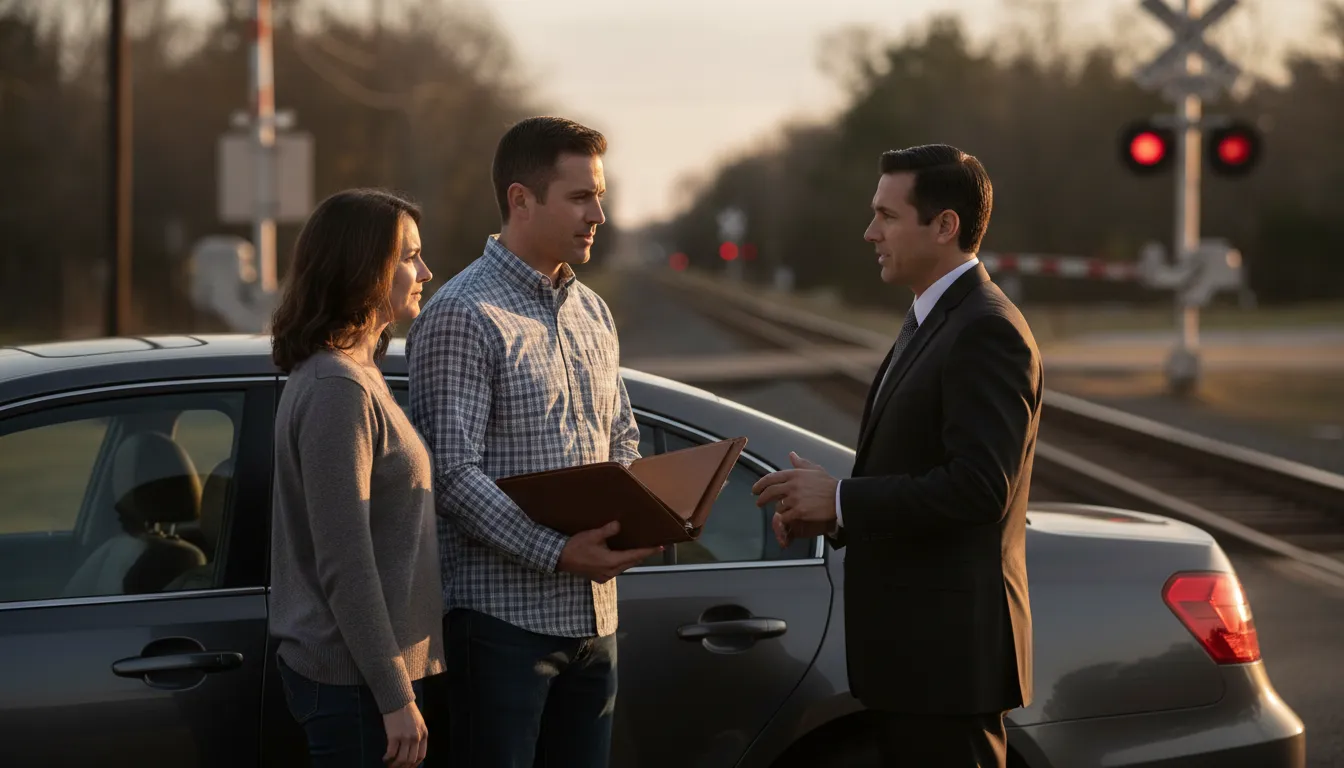
A train collision, crossing incident, or passenger injury can leave families facing urgent medical needs and unanswered questions. Before evidence disappears or memories fade, prioritize emergency care and document only what is safe to preserve, such as photographs, witness details, medical records, and incident paperwork.
Request a free case evaluation to discuss what happened with a Savannah personal injury team. The Cornwell Firm offers no upfront costs under its contingency-based representation, with no attorney fees unless the client wins.
A train accident lawyer savannah ga can help identify which records, witnesses, recordings, and physical conditions may clarify a claim. The responsible parties and legal theories depend on the specific facts.
Rail incidents may involve more than the visible damage at the scene. Federal and safety investigators can examine operations, signals, equipment, event-recording data, and human factors. Understanding why prompt investigation matters is the first step toward protecting the information needed to evaluate what happened.
After a train collision, crossing incident, or passenger injury, safety and medical care come first. Move away from active tracks and other hazards, follow emergency instructions, and seek medical attention even when symptoms seem manageable. Early treatment also creates a clearer record of injuries and how they developed.
Once it is safe, information about the scene may become harder to confirm. Conditions can change, equipment can be repaired, and memories can fade. Do not return to tracks, enter restricted areas, confront railroad personnel, or try to collect evidence in an unsafe location. Instead, preserve photographs, messages, reports, names of witnesses, and other information already in your possession. A lawyer can help identify what additional records may need to be requested.
Rail investigations can involve more than the train itself. The Federal Railroad Administration explains that its reporting and investigation work covers grade-crossing incidents, rail equipment incidents, and casualties to people. The FRA says its investigations may help identify root causes and prevent future incidents.
Available records may include reports addressing operations, signals, mechanical issues, survival factors, or locomotive event data. A crossing event recorder may record information such as train speed, direction, time, and distance over a recent operating period. The FRA crossing guide also recognizes remote health-monitoring systems that can notify a railroad when warning-system components are not functioning as intended. The FRA crossing inventory guide explains these categories.
Responsibility is fact-specific. The evidence may point toward questions about a crossing, warning system, train operation, maintenance, property conditions, another vehicle, or several contributing factors. A prompt, careful investigation helps preserve those questions without assuming the answer before the records and medical evidence are reviewed.
| Evidence category | What it may help clarify |
|---|---|
| Photos, video, and witnesses | What people could see, hear, and observe safely. |
| Crossing and event records | How warning devices and recorded operations functioned. |
| Medical and incident records | When injuries occurred and how they developed. |
Evidence can come from what people saw, what the crossing or train recorded, and what investigators can obtain after the event. If you can do so safely from a lawful location, photos or video may show the crossing layout, warning lights, gates, sight lines, road conditions, or visible damage. Do not approach active tracks, climb on rail equipment, or interfere with railroad personnel. Witness names and contact information can also matter, especially when accounts differ about signals, timing, speed, or movement.
Medical records help connect the incident to the injuries that followed. Keep discharge papers, treatment notes, prescriptions, bills, and records of follow-up care. Incident reports, emergency-response records, crossing reports, and other paperwork may also help establish when and where the event occurred. The same basic preservation discipline used when preserving commercial crash evidence can be useful here, but a rail investigation often turns on technical records that are not available to an injured person at the scene.
The Federal Railroad Administration's Crossing Inventory Guide identifies information about crossing equipment, including event recorders and remote health-monitoring systems. A public highway-rail crossing event recorder may capture data such as train speed, direction, time, and distance over a recent operating period. A remote health-monitoring system is designed to notify the railroad when automatic warning-system components are not functioning as intended. Those records can help investigators evaluate what the crossing system was designed to do and what it reported around the incident.
Investigators may seek recorded communications, onboard image recordings, and interviews with operators, conductors, dispatchers, and witnesses. The NTSB rail investigation report illustrates how event and image recorder data, interviews, crossing records, and sight-distance observations may be examined. These examples do not prove what happened in a particular Savannah incident. They show why preserving the scene safely and requesting targeted records can be important when determining how the collision or injury occurred.
When a crossing collision occurs, investigators work to reconstruct what each person could see, hear, and know before impact. The process may involve several kinds of physical evidence, electronic records, and witness accounts. A general NTSB investigation example illustrates the categories of information that may be reviewed, but it is not evidence about any particular Savannah crossing.
The NTSB report used for this general example is available in its crossing investigation materials. A train accident lawyer in Savannah, GA can help identify which records may matter while keeping evidence collection safe and fact-specific.
A passenger injury investigation may examine more than the immediate cause of a sudden stop, collision, derailment, or onboard fall. Investigators may assess whether the passenger compartment protected people as intended, including crashworthiness, structural integrity, window retention, and the amount of survivable space available after an impact.
They may also review how passengers could leave the train and how quickly help arrived. Relevant questions can include whether exits were accessible, emergency signage was understandable, passengers faced entrapment hazards, and emergency responders received the information and access they needed. These are investigation categories, not findings about any particular train or incident. The NTSB passenger-injury report illustrates how technical equipment, records, and emergency-related evidence can be examined without assuming fault in advance.
Other evidence may include the passenger's ticket or trip details, seating location, photographs, witness accounts, medical records, and incident reports. Investigators may compare those materials with train design information, maintenance records, operating data, crew communications, and the physical condition of the car. A prompt investigation can help preserve information that may later be difficult to obtain. Injured people should never return to a dangerous scene or interfere with railroad personnel.
A passenger claim is also different from an injury involving a railroad employee. Federal railroad-employee rules, including FELA, may apply to qualifying employees in circumstances involving work-related negligence. A passenger is not automatically covered by those rules. The potentially responsible parties and legal theories depend on the evidence, the type of train, and what happened. For a related discussion of investigating injuries involving riders, see this guide to a passenger injury claim investigation. A case-specific review is important before drawing conclusions about liability.
Responsibility after a train-related injury depends on what happened, who controlled the relevant part of the operation, and what the evidence shows. More than one person or entity may need to be examined. A careful investigation does not assume fault based only on the fact that a collision or injury occurred.
Potentially responsible parties may include the railroad or rail operator, the owner of the train or equipment, and contractors involved in operating or maintaining it. If the incident occurred at a crossing, investigators may also examine entities responsible for the crossing, signals, roadway, or surrounding property. Maintenance companies and other service providers may be relevant when equipment, tracks, warning systems, or premises conditions are at issue.
In a collision involving a motor vehicle, the vehicle driver may be part of the investigation as well. Witness accounts, photographs, vehicle and train data, crossing records, inspection and maintenance records, dispatch communications, and other evidence can help identify which parties had a role. Federal rail investigation materials show that records may include signal and train-control information, mechanical reports, operations records, and event-recorder data. These materials are examples of investigation categories, not proof of what occurred in a particular Savannah incident.
A passenger, motorist, pedestrian, and railroad employee may have different legal claims and different rules may apply. For example, the Federal Employers Liability Act, or FELA, generally applies to qualifying railroad employees who are injured in connection with railroad work and whose injuries involve negligence. The statute can be reviewed through the Federal Employers Liability Act text. FELA is not a general rule for every passenger or crossing collision, so an employee's situation should be evaluated separately from a passenger or member of the public.
When a death occurs, the surviving family may also need to evaluate wrongful death claims in Georgia. The right claim and the parties involved depend on the facts, available records, and the injured person's relationship to the railroad or property. Preserving safe evidence and obtaining legal guidance can help a family understand which questions require further investigation.
After a train accident, focus first on immediate safety and medical care. Do not approach active tracks, rail equipment, or a damaged crossing to gather evidence. If you can do so without risk, ask someone you trust to help preserve information while you receive treatment.
If you or a family member was hurt, request a free case evaluation with The Cornwell Firm. The firm offers no upfront costs under its contingency-based terms, with no attorney fees unless the client wins.
When you are looking for a train accident lawyer savannah ga, you may need help turning scattered information into a clear account of what happened. A Savannah personal injury lawyer can help preserve safe evidence, identify witnesses, request relevant records, and organize the timeline while you focus on medical care and recovery.
The investigation may begin with photos or video you already have, witness contact information, incident reports, and medical records. Counsel can also help seek additional information from the parties involved. The lawyer can assess which people or entities may have responsibilities and evaluate how the available evidence supports or complicates a claim. The facts matter. A train passenger's injuries, a vehicle collision at a crossing, and a pedestrian incident may require different questions and different records.
The Cornwell Firm's general injury process includes evidence and witness-statement collection, medical-record review, and liability assessment. That process is not a promise of a particular result or a claim of train-specific credentials. It is a way to examine the circumstances carefully before discussing legal options. You can also review how an injury lawyer investigates in a related Savannah accident context.
Communication is part of that support. The firm offers 24/7 availability, English and Spanish services, and may meet clients where needed, including at home or in a hospital. A free case evaluation can help you understand what information to preserve and what questions deserve further investigation. The firm describes its contingency terms as no upfront costs and no attorney fees unless the client wins.
Want to discuss what happened? You can request a free case evaluation with The Cornwell Firm, without waiting to have every answer.
Put safety and medical care first. When it is safe, preserve photos or video, witness names and contact information, medical records, bills, incident paperwork, and messages about the event. Do not approach active tracks, move evidence, or confront railroad personnel. An attorney can help identify additional records that may need to be requested and preserved.
They can be. A passenger, motorist, pedestrian, and railroad employee may have different legal issues, responsible parties, and available claims. The Federal Employers' Liability Act generally concerns qualifying railroad employees, not every person injured in a train-related incident. The facts should be reviewed before anyone assumes which legal framework applies.
The Cornwell Firm offers free case evaluations and contingency-based representation. Under the firm's terms, clients do not pay attorney fees unless they win, and there are no upfront costs. Ask about the specific fee agreement and any case-related expenses before moving forward.
As soon as reasonably possible after receiving needed medical care. Evidence can change or disappear, witnesses may become difficult to locate, and the correct parties may not be obvious. Georgia deadlines and other requirements can depend on the people involved and the facts, so do not rely on a general deadline without case-specific legal advice.
Train incidents can involve important records, witnesses, and questions about who may be responsible. A timely review can help you understand what information may matter and how to protect your potential claim. Request a free case evaluation through The Cornwell Firm's contact page. The firm offers contingency-based representation with no upfront costs or attorney fees unless you win.