5.0

(912) 225-4938 Serving Georgia & South Carolina
Request Call Back
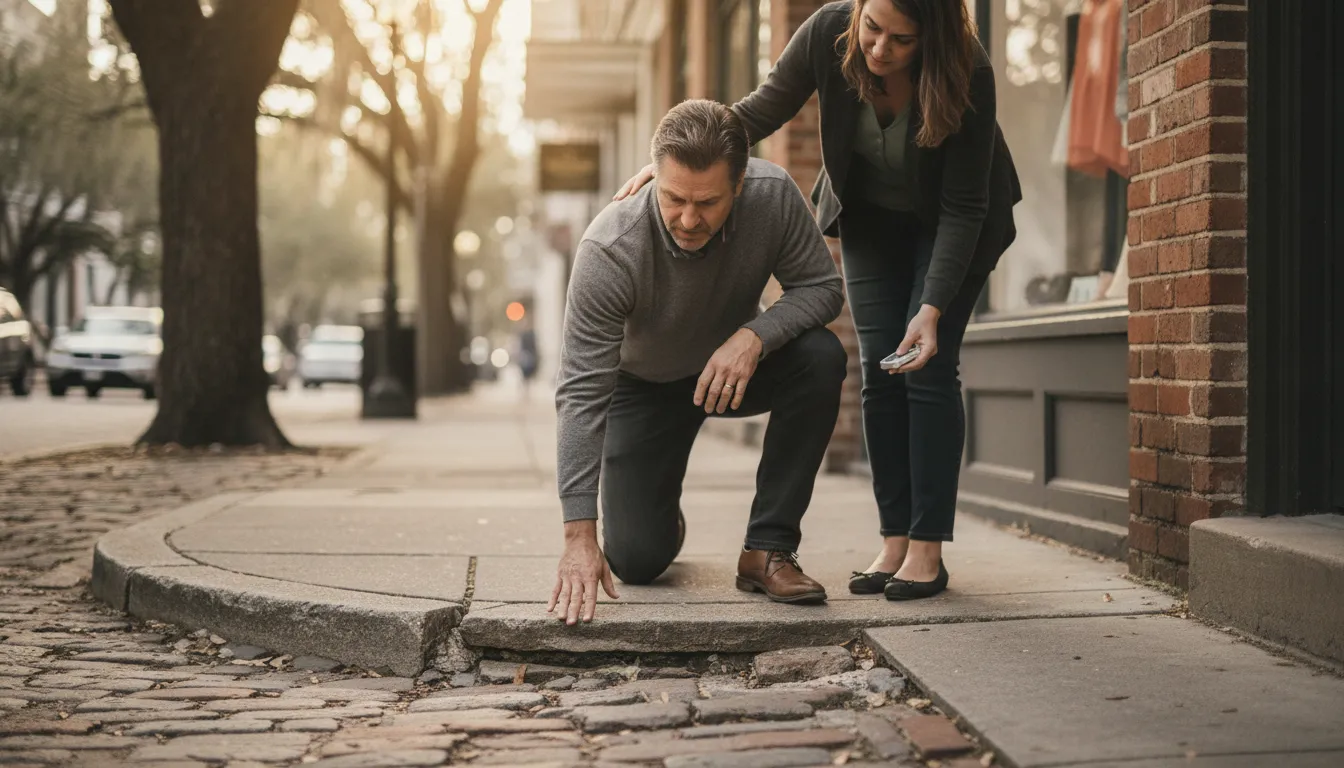
A trip and fall can leave you with pain, medical bills, missed work, and difficult questions about what caused the incident. A trip and fall attorney can investigate a raised sidewalk, broken step, or defective floor. The fall alone does not automatically establish liability. Evidence must connect the hazard to the injury. It must also show that the property owner or occupier had notice, or should have discovered the condition through reasonable care.
Request a free case evaluation by contacting The Cornwell Firm at (912) 225-4938.
A trip and fall attorney investigates the condition, evaluates notice and superior knowledge, preserves records and video, and gathers witness and medical evidence. The attorney then assesses whether the facts support a premises-liability claim. The investigation does not guarantee a result.
This work is time-sensitive. A property owner may repair the condition. Surveillance footage may be overwritten, and witnesses may forget what they observed. The following guide explains the legal issues and practical evidence that may matter in a Savannah, Georgia premises-liability claim.
A Georgia trip and fall claim generally requires evidence of a duty, a hazardous condition, and a breach of reasonable care. It also requires evidence of the property owner's actual or constructive knowledge, causation, and recognizable damages. The injured person may need to address equal knowledge of the danger. A fall alone does not prove every required element.
Property owners and occupiers have responsibilities to people who are lawfully on their premises. Georgia's premises-liability statute describes an owner's duty to exercise ordinary care in keeping the premises and approaches safe. The statutory language is available in Georgia Code Section 51-3-1. The precise duty may depend on why you were on the property and your relationship with the owner or occupier.
The claim must identify a specific condition that created an unreasonable risk. Examples include a raised or broken walkway, loose flooring, a defective stair, poor lighting, an unmarked change in elevation, or an obstruction in a path. A surface does not have to be perfect for a claim to exist. The important questions are what the condition was, whether it was dangerous under the circumstances, and whether reasonable steps could have reduced the risk.
A breach may involve failing to repair a known defect, failing to warn visitors, failing to conduct reasonable inspections, or failing to correct a recurring problem. Notice is a separate and often central issue. Actual notice means a responsible owner, manager, or employee knew about the condition. Constructive notice means the condition existed long enough, or was located in a way, that reasonable care should have led to its discovery.
Evidence should also address causation. The condition must be connected to the fall and the injuries claimed. A medical record can document diagnoses and treatment, while photographs, witness accounts, and a consistent history can help explain how the incident occurred. Damages may include medical expenses, lost income, pain, and other losses supported by the facts. The responsible party may dispute any of these elements.
| Issue | Question the evidence should answer |
|---|---|
| Duty | Did the owner or occupier owe a duty of ordinary care? |
| Hazard and breach | What condition caused the fall, and what reasonable response was missing? |
| Notice | Did the owner know, or should a reasonable inspection have found the condition? |
| Causation and damages | Did the condition cause the injury and documented losses? |
The premises-liability information from The Cornwell Firm provides additional context about incidents involving hazardous property conditions, including trip and fall claims.
Notice can determine whether a property-owner negligence claim is viable. The evidence must show that the owner or occupier knew about the hazard or should have discovered it through reasonable care. It may also need to show that the injured person did not have equal knowledge of the condition before the trip and fall.
Actual notice may be shown through a prior complaint, a maintenance request, an incident report, an employee statement, a repair ticket, or a witness who told a manager about the condition.
An employee may also have notice after seeing the condition, creating it during work, or receiving instructions to inspect the area. The investigation should identify who worked nearby, what that person knew, and when the knowledge arose.
Constructive notice does not require an admission. A claim may rely on evidence about how long a hazard existed, how visible it was, and whether an employee was near enough to discover it through ordinary care.
Inspection schedules, cleaning logs, staffing records, surveillance footage, and maintenance histories may help test whether an inspection occurred and whether it was reasonable.
Some hazards appear briefly, while others recur over days or weeks. Water that repeatedly collects near an entrance, a loose mat that shifts during busy periods, or a step that has been reported before may require a different investigation from a one-time spill.
Repair history and prior complaints can help show whether the owner had an opportunity to address a recurring risk.
The owner may argue that the hazard appeared only moments before the fall, was open and obvious, or was visible to a careful visitor. These arguments make the setting important. Lighting, obstructions, warnings, the direction you were walking, the condition of the surface, and what you could actually see may all matter. Georgia courts often focus on superior knowledge, so the facts should be examined rather than assumed.
Preserving evidence promptly is important because notice is often proven through records created before or after the incident. A trip and fall attorney can help organize the timeline and evaluate whether the available evidence supports a claim without assuming that the property owner is automatically responsible.
The strongest evidence often shows the condition, its location, how long it may have existed, who knew about it, and how it caused the injury. Useful materials can include photographs, video, witness information, incident reports, inspection records, medical documentation, footwear, clothing, and a contemporaneous account of what happened.
If it is safe to do so, photograph the area from several angles. Take wide images showing the path and surroundings, followed by closer images of the raised edge, obstruction, damaged flooring, lighting, or other condition. Include something that provides scale when possible, but do not place yourself at risk to recreate the incident. If the condition is repaired or removed later, earlier photographs may be especially important.
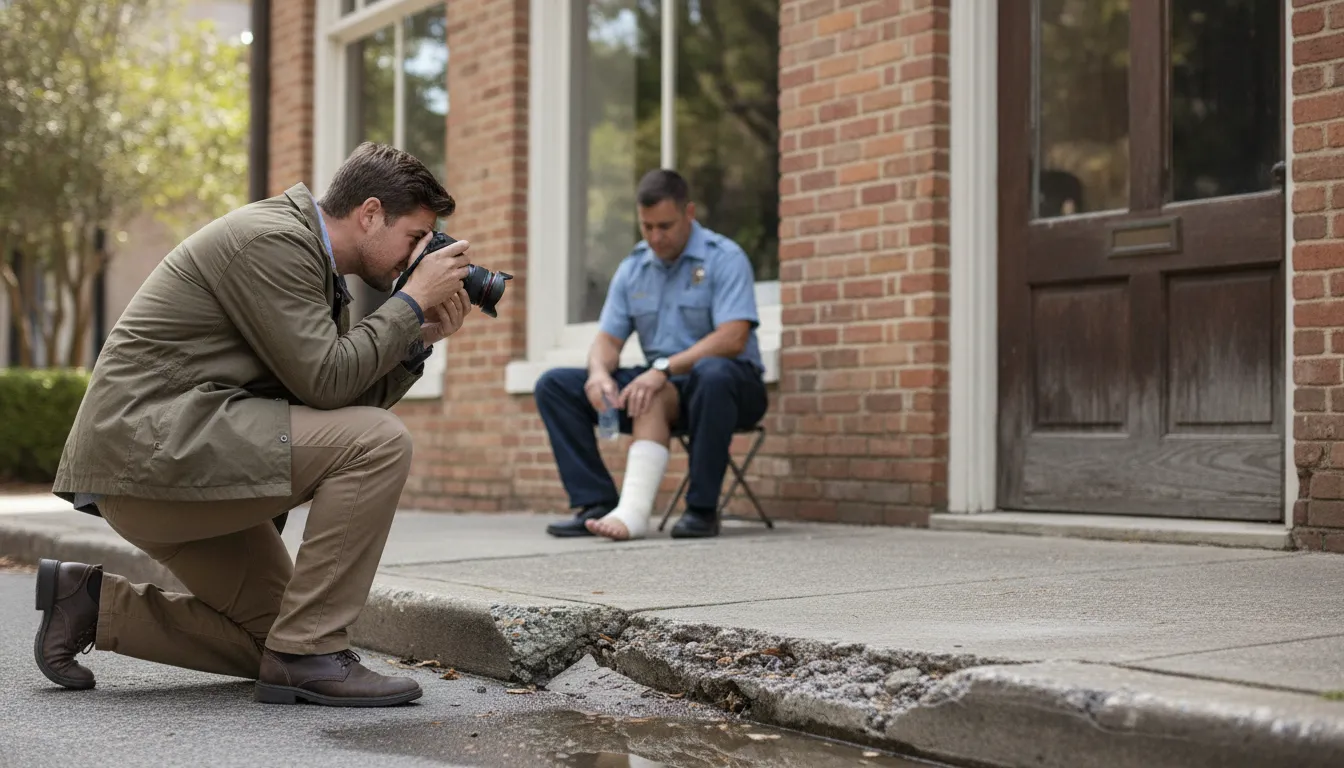
Report the incident promptly to a property owner, manager, security representative, or another responsible person. Ask whether an incident report was prepared and record who received your report. Keep your description factual. Do not guess about a cause, adopt another person's explanation, or minimize symptoms that may become clearer later.
Witnesses may have seen the fall, noticed the hazard before the incident, or observed how employees responded afterward. Write down names and contact information while the details are fresh. An employee may also have information about prior complaints, inspections, cleanup, or recurring conditions. Avoid pressuring witnesses to characterize the event. Preserve what they actually observed.
Set aside the shoes and clothing you wore. Do not wash, repair, discard, or alter them before discussing the incident with a lawyer. Measurements, diagrams, and close-up photographs can help explain the height or depth of a surface defect, the location of an obstruction, or the distance to a warning sign. Physical evidence should be stored in a clean, dry place.
Seek medical evaluation and follow the provider's instructions. Tell the provider that you fell and describe your symptoms accurately. Keep discharge instructions, bills, prescriptions, therapy records, work-loss records, and notes about changes in ordinary activities. Medical care is important for your health, not merely for a legal claim.
Head injuries can require urgent attention. The Mayo Clinic head-trauma guidance describes serious symptoms that warrant emergency help. Follow medical advice and seek urgent care when symptoms are severe or worsening. The retail store accident information from The Cornwell Firm also explains how premises conditions can arise in stores and other public settings.
Consider contacting a trip and fall attorney when the injury is significant or the property owner disputes what happened. Early review can also help when the condition changed, surveillance may be overwritten, or the claim involves substantial medical care or lost income. Early review can help preserve evidence, but it cannot guarantee liability or compensation.
Early legal guidance may help identify the records that matter before they disappear. Counsel can send appropriate preservation requests for surveillance footage, inspection records, maintenance logs, cleaning schedules, incident reports, and employee communications. A prompt investigation can also locate witnesses and document a changing condition.
Property owners and insurers may request a recorded statement, medical authorization, or release soon after an incident. A lawyer can explain what is being requested and help you communicate accurately. This does not mean you should refuse every request. It means you should understand the potential effect of a statement or document before signing it.
A careful investigation considers more than whether a hazard existed. It asks when the condition developed, whether employees knew about it, whether reasonable inspections occurred, whether a warning was provided, and whether the condition caused the injury. It also considers arguments about visibility, footwear, distractions, route, and comparative responsibility.
The goal is not to select a conclusion before reviewing the facts. The goal is to test each explanation against photographs, records, witness accounts, medical evidence, and the physical setting. Former insurance-defense experience may help an attorney anticipate how an insurer evaluates notice, causation, fault, and the completeness of claimed losses. The case still depends on the evidence available.
Information about The Cornwell Firm's attorneys and experience can help readers understand the firm's approach. A lawyer should still review the specific facts before offering an opinion about a possible claim.
After a trip and fall in Savannah, prioritize safety and medical care. Report the incident and photograph the condition when safe. Identify witnesses, preserve clothing and shoes, track symptoms and losses, and avoid signing statements or releases you do not understand. Prompt documentation can help preserve facts while the scene and memories are still fresh.
A trip and fall attorney investigates the condition and identifies possible responsible parties. The attorney evaluates notice and superior knowledge, preserves records and video, gathers witness and medical evidence, and assesses whether the facts support a premises-liability claim. The attorney may also communicate with insurers and explain options. The investigation does not guarantee a result.
Actual notice may be shown through complaints, incident reports, employee testimony, maintenance requests, or records showing that a responsible person saw the condition. Constructive notice may involve the hazard's duration, visibility, location, inspection practices, or recurring nature. The available evidence must be evaluated in context, and a fall alone does not prove notice.
Photographs, witness accounts, incident reports, medical records, and prompt documentation may help show what the condition looked like before it changed. Surveillance or maintenance records may also provide useful context. A later repair does not by itself establish negligence, but preserving evidence before the condition is altered can make the facts easier to evaluate.
The owner may argue that the condition was visible or that you had equal knowledge of the danger. The analysis can depend on lighting, obstructions, warnings, the path of travel, the condition's size and location, and what a reasonably careful person could have seen. A trip and fall attorney can evaluate those facts instead of assuming either side is correct.
The Cornwell Firm offers free case evaluations and contingency-based representation for qualifying personal injury matters, with no attorney fees unless the client wins. Case expenses and fee arrangements should be discussed directly with the firm because terms can depend on the facts and the representation agreement. No lawyer can guarantee a case result or recovery.