5.0

(912) 225-4938 Serving Georgia & South Carolina
Request Call Back
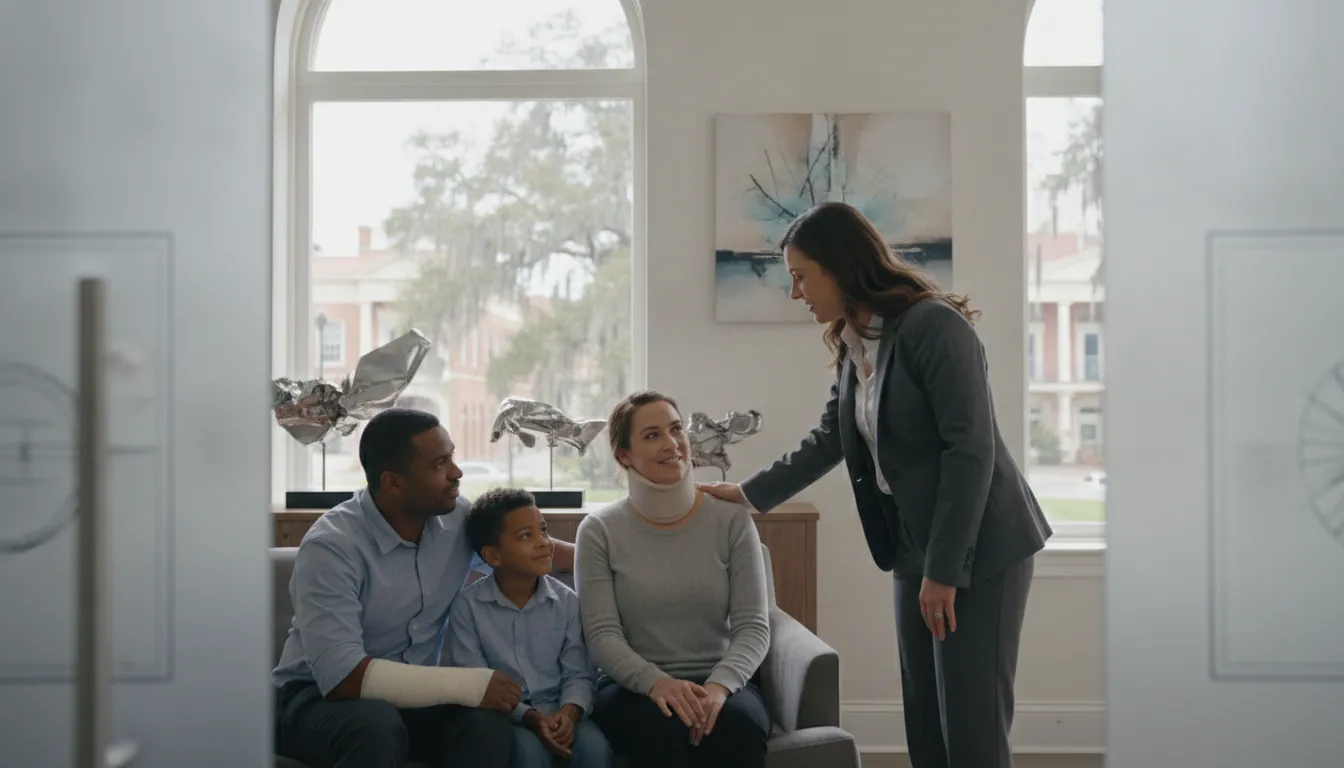
The first minutes after a Savannah, Georgia car crash can affect your health, your evidence, and your ability to pursue compensation. Move to safety if you can, call 911, get medical attention, and avoid guessing about fault at the scene.
After a collision, document what happened, exchange information, follow your treatment plan, and preserve every record. A car accident lawyer in savannah can help evaluate fault, respond to insurers. And pursue compensation for medical bills, lost income, pain and suffering, and other losses without promising a particular result.
Georgia uses fault rules that can reduce compensation when more than one person contributed to a crash. Understanding what to do immediately, how liability is assessed, and how a claim develops can help you protect your options from the start.
Request a free case evaluation with a Savannah car accident lawyer today.
The first minutes after a crash can feel confusing, but a few careful steps can protect your health and preserve information about what happened. Focus on safety first. If you can do so without worsening an injury, move your vehicle out of active traffic and turn on your hazard lights. Do not leave the scene. If anyone may be hurt, the roadway is dangerous, or the vehicles are blocking traffic, call 911 and follow the dispatcher's instructions.
Ask for emergency medical help when needed, even if an injury does not seem severe. Some symptoms develop later, and a medical record can document what you reported and when you received care. If you decline an ambulance, arrange prompt medical evaluation and follow the provider's instructions.
Ask the responding officer how to obtain the incident report. Give a truthful, concise account of what you remember. Avoid guessing about speed, distance, or fault. Do not apologize or say that the crash was your fault, even if you are shaken or believe you could have done something differently. Questions about responsibility should be addressed after the facts are reviewed.
If your condition and surroundings make it safe, take photographs and video of the vehicles, damage, roadway, traffic controls, visible injuries, and the surrounding area. Capture different angles, not just close-ups. Note the time, weather, lighting, lane positions, and anything unusual about the road. Do not put yourself in danger to take a photograph or move evidence.
Exchange names, phone numbers, driver's license information, insurance details, license plate numbers, and vehicle descriptions with the other drivers. Get contact information from witnesses. Keep the exchange focused on information, not arguments about who caused the collision. Save photographs, medical records, receipts, repair estimates, tow records, and any messages or notes related to the crash.
Notify your insurer promptly as required by your policy, but keep your description factual and limited to what you know. Do not provide a recorded statement, sign a release, or accept a settlement before you understand the extent of your injuries and the terms of the proposal. Preserve the clothing, helmet, or other personal items involved in the crash, and do not repair or discard damaged property before it has been documented.
Once immediate safety and medical needs are handled, a legal consultation can help you understand the next steps without committing you to a claim. Learn more about the car accident lawyer process and how information from the scene may affect an insurance claim.
Georgia uses a fault-based approach to car accident claims. That means responsibility is evaluated from the facts of the collision, including driver conduct, roadway conditions, vehicle damage, witness accounts, and other available evidence. The question is not only whether another driver made a mistake. It is also whether that mistake caused your injuries and losses.
Georgia follows a modified comparative negligence rule. If an injured person is found to be 50% or more at fault, that person is barred from recovering damages. If the person's share of fault is below 50%, the damages award is reduced in proportion to that percentage. For example, a person found 20% responsible could have a potential award reduced by 20%, subject to the facts and legal issues in the claim. The Georgia Courts' explanation of apportionment describes this rule and the requirement that damages be reduced according to the plaintiff's percentage of fault: Georgia's apportionment of damages guidance.
Fault is not always limited to the two drivers involved. Georgia law directs the fact finder to consider the fault of all people or entities that contributed to the injury. Including nonparties who were not named in the lawsuit. That can make the investigation especially important when a crash may involve a vehicle owner, an employer, a road condition, a defective part, or another contributing actor. The same Georgia Courts source explains that fault percentages may be assigned among all persons or entities that contributed to the claimed injury. Whether or not they could have been named as parties.
Evidence can include the police report, photographs, vehicle damage, traffic-camera or business surveillance footage, electronic data, medical records, and witness statements. Insurance companies may focus on anything that can shift blame or minimize the seriousness of an injury. Avoid guessing about speed, distance, or what another driver saw. Give accurate information, but do not accept an adjuster's conclusion about fault before the evidence has been reviewed.
Our former insurance-defense experience gives The Cornwell Firm a practical perspective on how insurers evaluate liability. We understand the arguments an insurer may use to dispute causation, challenge the severity of an injury, or assign part of the blame to the injured person. That insight helps us identify evidence that needs to be preserved and respond to liability arguments with a focused investigation. It does not change the facts, and no lawyer can guarantee a result.
There can also be consequences for an at-fault driver who does not satisfy an accident-related claim. Under Georgia's Safety Responsibility Law, a driver's license may be suspended after a claim for crash damage is filed and remains unsatisfied. The Georgia Department of Driver Services explains this process in its Safety Responsibility Law information. That administrative issue is separate from proving your injury claim, but it shows why accident-related liability can carry consequences beyond an insurance negotiation.
If you are unsure how the evidence affects your position, learn more about when to hire a car accident lawyer. A careful review can help you understand the claims process and protect your ability to make informed decisions in Savannah.
The value of an injury claim depends on the evidence, the injuries, the treatment required, and the losses connected to the crash. Compensation may include emergency and ongoing medical bills, lost wages, reduced future earning ability, pain and suffering. Vehicle or other property damage, and the cost of future care when an injury has lasting effects. These damages are not automatic, and no lawyer can guarantee a particular settlement amount. A careful investigation helps establish what you may be entitled to pursue.
| Economic damages | Non-economic damages |
|---|---|
| Past and future medical bills | Pain and suffering |
| Lost wages and reduced earning ability | Loss of enjoyment of daily activities |
| Vehicle or other property damage | Emotional distress and reduced quality of life |
| Out-of-pocket costs like prescriptions and rides | Physical impairment and long-term limitations |
Georgia's Safety Responsibility Law is another reason not to stay silent after a serious collision. The Georgia Department of Driver Services explains that a driver's license can be suspended if the driver fails to satisfy a claim for damage resulting from a motor vehicle crash: Georgia Safety Responsibility Law. The process commonly unfolds in these stages:
Seeking advice early can protect evidence and help you understand your options before an insurance deadline or legal deadline narrows them.
After a crash, you may be dealing with pain, medical appointments, vehicle damage, missed work, and difficult conversations with an insurance adjuster. Handling all of that while trying to protect your claim can quickly become overwhelming. A car accident lawyer in Savannah can take over the claim-related burden so you can focus on your health and your family.
Insurance companies are businesses, and their adjusters are trained to evaluate claims with the insurer's interests in mind. An early settlement offer may not account for continuing treatment, lost income, future care, or the full impact of an injury. You do not have to accept the first number presented or give a recorded statement before you understand your rights. Your lawyer can communicate with the insurer, organize the supporting evidence, and push for a resolution that reflects the harm you have experienced.
When you handle a claim alone, the insurer may try to shift responsibility to you, minimize your symptoms, or argue that a pre-existing condition caused your limitations. A lawyer investigates the crash rather than relying only on the other driver's account. That may include reviewing the collision report, photographs, vehicle damage, medical records, witness accounts, and available video. Evidence can become harder to locate as time passes, so preserving it early matters.
Liability can also be more complicated than it appears at the scene. Georgia apportions fault among the parties involved, and in some circumstances a nonparty may also be included in that analysis. If your conduct is alleged to have contributed to the collision, the percentage assigned to you may affect the amount you can recover. An attorney can test those allegations, identify responsible parties, and present evidence supporting your position instead of leaving the insurer's version unchallenged.
Strong negotiation is not just asking for more money. It requires showing why the requested compensation is supported by the evidence. Your lawyer can document medical expenses, lost wages, property damage, pain and suffering, and the effect of the injury on your daily life. When a claim involves disputed fault, serious injuries, or long-term treatment, the lawyer may also consult appropriate professionals who can explain the collision, medical condition, or financial losses.
The Cornwell Firm brings an important perspective to this process through its former insurance-defense experience. Our attorneys understand how insurers analyze, value, and defend injury claims because they have worked from that side of the dispute. That insight helps us anticipate common defenses while keeping the focus on your recovery and accountability.
For more on how an attorney can help after a collision, read about our Savannah auto injury lawyer services. The Cornwell Firm offers free case evaluations, no upfront costs, and contingency-based representation, so there are no attorney fees unless you win.
After a crash, choosing representation is about more than finding someone who handles injury claims. You need a team that listens to what happened, explains your options clearly. And is prepared to stand up to an insurance company when its offer does not reflect the harm you experienced. The Cornwell Firm is a boutique, locally and family-owned plaintiff-side personal injury firm serving people in Savannah, Georgia.
Founded in 2017, The Cornwell Firm brings over 20 years of combined practice experience to the work. That experience includes former insurance-defense work, which gives our attorneys insight into how insurers evaluate liability, medical records, damages, and settlement demands. We use that perspective to prepare your claim carefully and to pursue accountability with a compassionate but aggressive approach.
A boutique firm can provide direct, personal attention throughout the legal process. We take time to understand your injuries, your concerns, and the practical challenges you are facing after a collision. You are not expected to navigate insurance communications or legal decisions without guidance. Our goal is to help you make informed choices while we handle the work required to build your claim.
We are available 24/7 to answer questions and provide direction after an accident. If your injuries make travel difficult, we can meet you where you are, including at a hospital, home, or office. Our team also offers support in English and Spanish, making it easier for you to communicate comfortably about what happened and what you need.
We know that an injury can affect far more than your vehicle. Medical appointments, missed work, pain, and uncertainty can place pressure on you and your family. We approach each person with care while preparing to deal directly with insurers and other responsible parties. Learn more about how we help injured people through our Savannah auto injury lawyer resource.
The Cornwell Firm offers free case evaluations. If we represent you, there are no upfront costs, and our contingency-based arrangement means you do not pay attorney fees unless you win. We will explain the agreement before you decide how to proceed. Call (912) 349-7028 or contact us to discuss your situation and request a free case evaluation.
Call (912) 225-4938 or reach out now for a free case evaluation with a Savannah car accident lawyer.
Not every minor crash requires a lawsuit, but you should not dismiss an accident before you understand your injuries and losses. Pain from whiplash or other soft-tissue injuries may develop after the collision, and even a modest impact can create medical bills, missed work, or vehicle damage. Consider speaking with a lawyer if an insurer disputes fault, pressures you to settle, or your symptoms continue.
Be honest and complete, including facts that may seem unfavorable. Do not guess about speed, fault, your medical history, or how quickly you will recover. Avoid minimizing your symptoms or repeating an insurer's description of the crash as though it were established fact. Your lawyer needs accurate information to investigate the collision and advise you responsibly.
Partial fault does not automatically end a claim in Georgia. Damages may be reduced in proportion to your assigned fault. But a plaintiff who is 50% or more at fault is barred from recovery under Georgia's modified comparative negligence rule. A court may also consider the fault of other responsible parties, including nonparties. Georgia Courts explains apportionment of damages.
There is no guaranteed outcome. The strength of a claim depends on evidence such as the crash report, photographs, witness accounts, medical records, and proof of financial losses. Disputed fault, delayed treatment, preexisting conditions, and inconsistent statements can make a claim more difficult. A thorough investigation helps identify what can be proven and whether negotiation or litigation is appropriate.
After a crash, a conversation with an experienced attorney can help you understand your options and protect your ability to pursue compensation. The Cornwell Firm offers a free case evaluation, with no upfront costs and no attorney fees unless you win. Call for a free case evaluation and speak with a Savannah car accident lawyer 24/7 at (912) 349-7028.