5.0

(912) 225-4938 Serving Georgia & South Carolina
Request Call Back
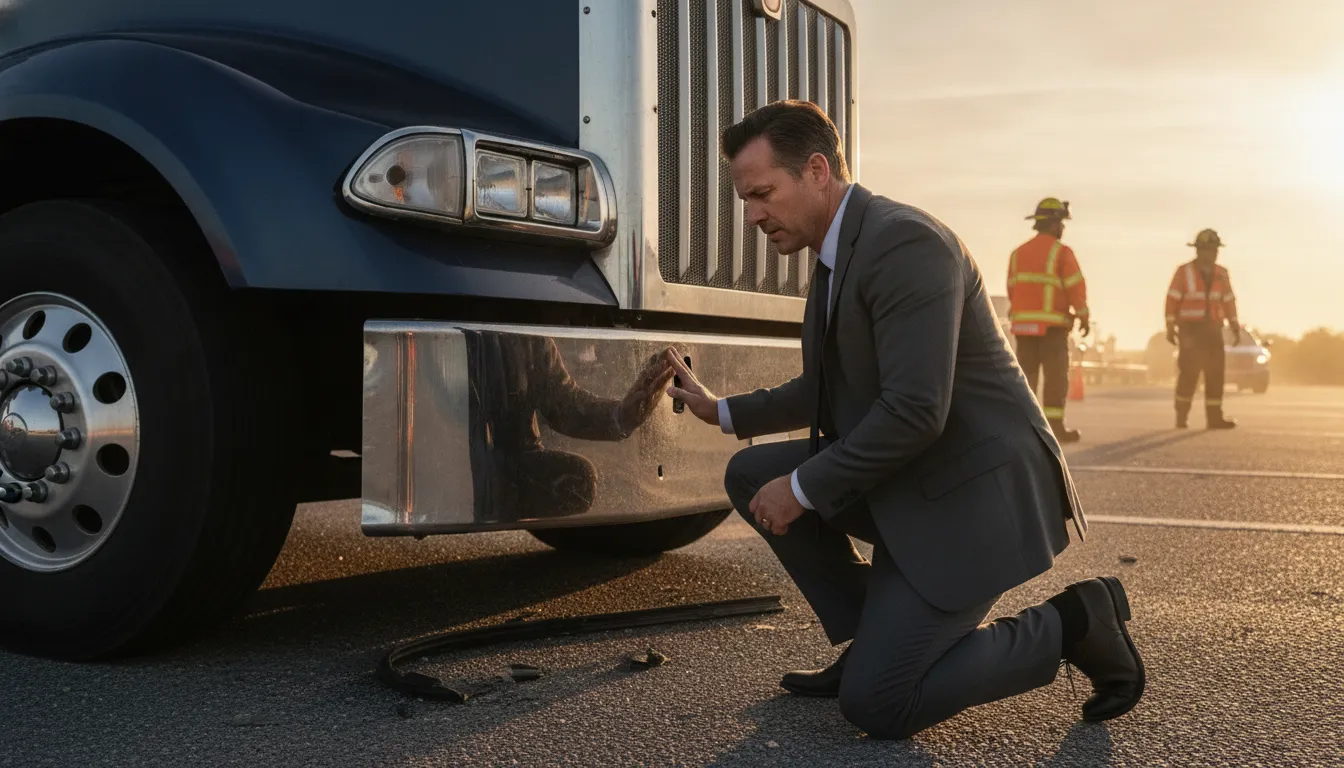
A collision with a tractor-trailer can leave a Savannah family facing serious injuries, lost income, and unanswered questions about who was responsible. A fully loaded tractor-trailer may weigh up to 80,000 pounds on federal highways, compared with roughly 4,000 pounds for a passenger car. That difference can turn a moment on the road into a life-changing event. Tractor trailer accident lawyers help injured victims investigate the driver, the trucking company, and the insurance issues that may affect a claim. Request a free case evaluation by calling (912) 225-4938 to speak with a Savannah attorney today.
When a passenger car and a tractor-trailer collide, the difference in weight changes everything. A loaded tractor-trailer can weigh up to 80,000 pounds under federal rules, while a typical sedan weighs roughly 4,000 pounds. That imbalance means a truck crash can produce far greater force, more severe injuries, and more complex insurance claims than an ordinary car accident.
The physical difference is immediate. Even when the car is traveling within the speed limit, the truck's mass and momentum can create dramatically greater force on impact. Occupants of the smaller vehicle may absorb the greatest share of that force, while the truck driver sits in a much larger protective structure. That imbalance can change the entire aftermath of a Savannah crash, often causing extensive damage to the passenger vehicle and more serious injuries to the people inside it.
A person who walks away from a typical car accident with soreness may instead face a hospital stay after a tractor-trailer collision. Families may also lose income while an injured person cannot work. They may take on continuing costs for treatment, medication, transportation, or in-home support.
Federal crash data reflects how unequal this risk is. According to the NHTSA Traffic Safety Facts, 2022, 5,936 people were killed in crashes involving large trucks that year. Seventy percent of those killed were occupants of other vehicles rather than the truck driver. Those figures do not predict what happened in any individual Savannah case, but they show why a commercial truck crash deserves careful investigation from the start.
A serious truck collision can create damages that develop over months or years. Medical bills may include emergency care, surgery, physical therapy, neurological treatment, and future care. If an injury affects the victim's ability to work, the claim may also involve lost wages and reduced future earning capacity. A fatal crash can leave surviving family members facing both financial losses and profound grief.
These cases also may involve more than the conduct of one driver. Driver training, vehicle maintenance, cargo loading, company policies, and commercial insurance can all matter. Trucking companies and their insurers often begin preserving evidence and evaluating exposure quickly. That is one reason victims may benefit from speaking with experienced tractor trailer accident lawyers before giving a recorded statement or accepting an early settlement offer.
In a trucking case, the injuries and future losses to prove are often wider than in a car accident:
| Factor | Passenger Car Accident | Tractor-Trailer Crash |
|---|---|---|
| Damage to smaller vehicle | Isolated to the car and its occupants | Can be catastrophic and life-changing |
| Evidence available | Limited to photos and witness accounts | Electronic data recorder, driver logs, dispatch and maintenance records |
| Responsible parties | Usually one or two drivers | Driver, trucking company, truck owner, cargo loader, or parts maker |
| Insurance coverage | Typical personal auto policy | Commercial policy that can be far larger |
Liability after a tractor-trailer crash in Savannah, Georgia, rarely rests on one person. The driver may have made a dangerous decision, but the company that employed the driver, the owner of the truck, or a parts manufacturer may also have contributed. The business that loaded the cargo can add another responsible party. Identifying every responsible party matters because each may control different evidence and insurance coverage.
For example, federal hours-of-service rules limit how long a commercial driver may stay on duty to reduce fatigue-related crashes. The CDC and NIOSH note that long-haul truck drivers face elevated risks tied to fatigue and extended driving. If a driver exceeded legal limits, the trucking company may share responsibility for enforcing those rules. Maintenance failures, improperly secured cargo, and pressure to meet deadlines can each create separate grounds for liability.
Because multiple defendants may be involved, truck accident claims often require tracing the driver's logs and the company's hiring and training practices. They may also require checking whether anyone tampered with records after the crash. That is why victims benefit from an investigation that looks beyond the driver at the whole chain of responsibility. Identifying each party also turns up the insurance coverage needed to pay for medical care and lost income, which may be far greater than a private driver's policy.
The force of a tractor-trailer collision can produce catastrophic injuries that change a person's life in seconds. Common injuries include traumatic brain injuries, spinal cord damage with possible paralysis, internal organ injuries, broken bones, and burns. Because truck crashes involve so much force, victims may also face delayed symptoms, such as concussions or soft-tissue damage, that only become clear days later.
Traumatic brain injuries and spinal cord injuries are especially serious because they can affect a victim's ability to work, walk, think clearly, or care for loved ones. Internal injuries may not be obvious right away, which is why medical evaluation after any truck crash is essential. Survivors may also struggle with emotional distress and a loss of independence that extends long after physical wounds heal.

Because the full scope of an injury can take months to understand, documenting every treatment visit, symptom, and expense matters. Records from the ambulance, emergency room, follow-up specialists, and physical therapy can all support a claim for future care and earning losses. If you delayed medical treatment after a crash, symptoms may worsen while the insurance company argues your injuries were less serious. A timely evaluation also creates the medical record that helps prove what happened.
Proving a trucking claim requires more than a police report. Valuable evidence includes the truck's electronic data recorder, driver logs, dispatch records, maintenance files, cargo bills of lading, and photographs of the scene. Because trucks carry far more data than cars, a strong investigation can often reconstruct what happened with objective records.
Many modern commercial trucks carry an electronic data recorder that records speed, braking, and other details before a crash. Our guide to truck black-box evidence explains how that data can support a claim. Driver logs and time records can reveal whether hours-of-service limits were followed, while maintenance files show whether the vehicle was roadworthy. This evidence is often time-sensitive because trucking companies and insurers may begin preserving or altering it immediately.
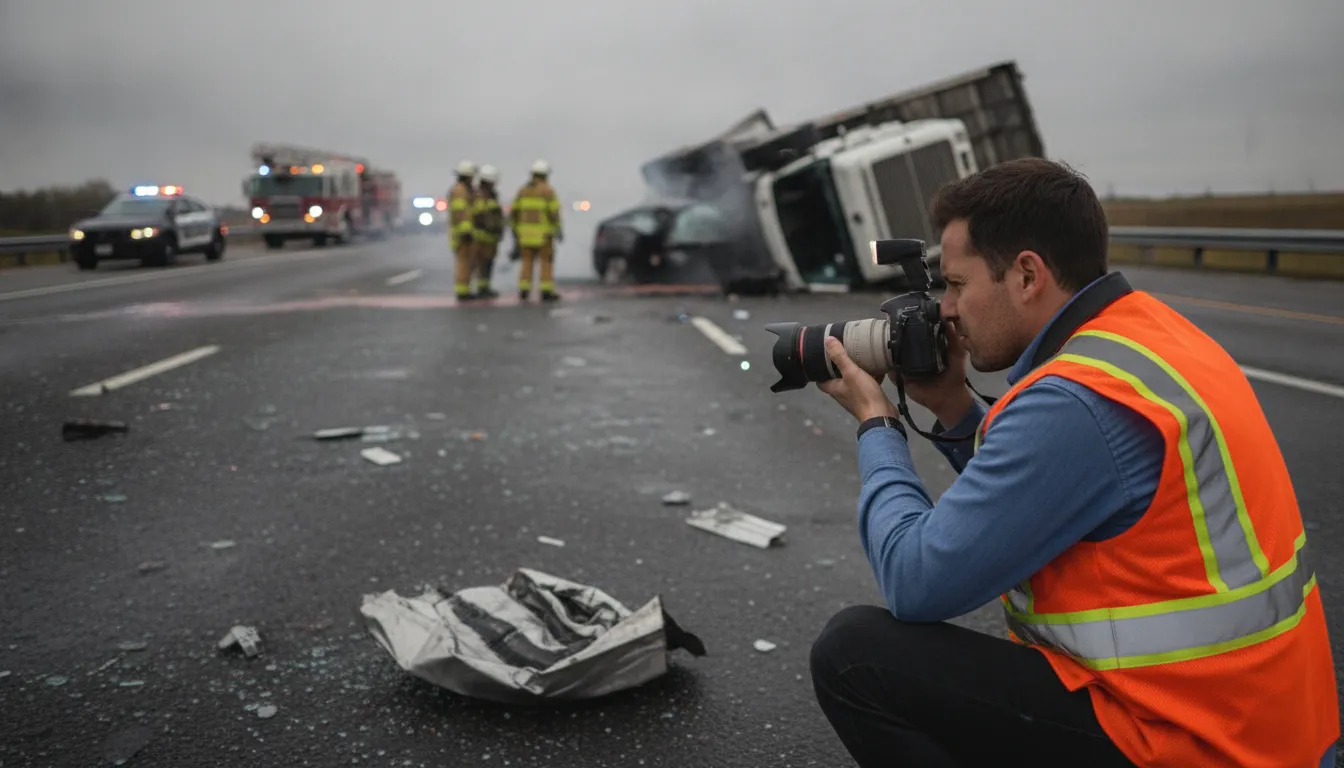
Other useful evidence includes witness statements, photographs of the road and vehicles before they are moved, and medical records that connect an injury to the crash. Acting quickly helps, because skid marks fade, witnesses forget details, and some electronic data may not stay stored forever. An attorney can issue written requests and subpoenas to preserve records before they are lost. For a closer look, see our summary on gathering essential evidence for tractor trailer claims.
Tractor trailer accident lawyers help injured victims investigate the driver, trucking company, cargo, maintenance, and insurance issues that may affect a claim. They preserve time-sensitive evidence, identify every responsible party, and pursue compensation without requiring upfront attorney fees. No lawyer can guarantee a result, but a structured investigation gives a claim its best chance.
A serious commercial-truck crash can leave you facing painful injuries and mounting medical bills. An insurance company may also move quickly to settle for far less than your losses are worth. A structured case typically follows these steps:
The investigation then focuses on proving each element of a claim. A lawyer must show that a party was negligent, that the negligence caused the crash, and that the crash caused measurable harm. Medical experts may testify about the extent of an injury and future needs, while accident reconstruction experts explain how the collision occurred. Insurers are then presented with a demand that reflects the full value of the claim, including medical expenses, lost income, and pain and suffering. In fatal cases, the demand can also cover the losses surviving family members may recover.
Most truck accident claims resolve through negotiation, but some require filing a lawsuit. When insurers refuse to pay a fair amount, litigation can give the evidence more weight. Our review of what to expect from truck accident lawyers walks through these stages so you know what to expect.
After any tractor-trailer crash, the best time to contact tractor trailer accident lawyers is early, before critical evidence disappears or deadlines pass. Under Georgia law, an injured person generally has two years from the date of a tractor-trailer accident to file a personal injury lawsuit under OCGA Section 9-3-33. Waiting too long can bar a claim entirely, even a serious one.
Trucking companies and their insurers often begin their own investigation immediately after a crash, so the evidence a victim needs is at risk from the first hours. Speaking with an attorney before giving a recorded statement or signing anything can help protect a claim. An early consultation also lets a lawyer request preservation orders and subpoenas while records are still available.
If a family lost a loved one in a truck crash, Georgia's wrongful death rules create their own deadlines and damages. We cover these in our guide to damages families can recover after a fatal truck crash. Acting promptly also helps document the full extent of injuries and losses before memories fade and evidence is lost.
If your crash involved a delayed injury, such as whiplash, a concussion, or internal bleeding, medical documentation matters. Our article on delayed injury symptoms after an accident explains why. The sooner a claim is organized, the better positioned it is to succeed. If you or a loved one were hurt in a truck crash, contact The Cornwell Firm for a free case evaluation today.
There is no reliable average that predicts what an individual case is worth, because settlements depend on many factors. Those factors include the severity of the injuries, the strength of the evidence, the available insurance, and the specific facts of the crash. An experienced attorney can estimate the value of a claim by reviewing medical bills, lost wages, future care needs, and the evidence of fault.
Yes. A victim injured by a negligent commercial driver can pursue a claim against the driver, the trucking company, or other responsible parties. Georgia law provides two years from the crash to file a personal injury lawsuit, so it is important to act within that deadline. An attorney can identify which parties may be liable and how to preserve the evidence needed to prove fault.
Insurers may offer an early settlement that seems helpful, but it often covers less than the full cost of medical care and lost income. An attorney can help you understand the true value of a claim and negotiate for a fair amount. Speaking with a lawyer before accepting a settlement helps protect your right to full compensation.
Avoid giving a recorded statement to the insurance company, admitting fault, or apologizing for the crash, because those words can be used against you. It is also wise to avoid posting details on social media. Instead, focus on getting medical care and documenting what happened, and let an attorney handle communications with the insurer.
Under Georgia law, you generally have two years from the date of the accident to file a personal injury lawsuit. If a family lost a loved one, separate wrongful death deadlines apply. Because evidence can be lost while you wait, it is best to contact an attorney soon after the crash.
If you or a family member were hurt in a tractor-trailer crash in the Savannah area, a clear review of the facts can help. That review can identify what happened and what to do next. The Cornwell Firm offers free case evaluations with no upfront costs, and representation is contingency based, meaning you pay no attorney fees unless you win.
With over 20 years of combined practice experience, our team understands the serious injuries and complex liability involved in commercial trucking crashes. We are available 24/7 to meet you where you need us, and we provide support in English and Spanish. Request a free case evaluation by calling (912) 225-4938 today.